When you specify low-carbon wire for appliance frames, fasteners or welded mesh, the choice between SAE 1006, 1008 and 1010 can quietly decide your scrap rate, weldability and machine uptime. SAE 1008 steel wire sits in the middle of this family — a little stronger than 1006, more formable than 1010 — which is why it is one of the most widely specified cold-drawing and forming grades across Europe and North America. This guide explains the real differences between the three grades, where each one fits, and how to buy them with confidence from an export-ready manufacturer.
What the SAE 10xx grades actually mean
SAE 1006, 1008 and 1010 all belong to the plain-carbon 10xx series, the low-carbon end of the SAE-AISI classification. The last two digits approximate the nominal carbon content in hundredths of one percent, so the differences between the three are small in absolute terms but meaningful on the shop floor. A few points of carbon and a slightly wider manganese range change hardness, how quickly the wire work-hardens as it is drawn, and how cleanly it welds. Because carbon stays low across all three, every grade remains highly ductile and weldable — the question is one of degree, not of category.
SAE 1006 vs 1008 vs 1010: the key differences
Typical published compositions and tendencies look like this:
- SAE 1006 — carbon about 0.08% maximum, manganese roughly 0.25–0.40%. The softest and most ductile; best where deep drawing or heavy cold forming dominates.
- SAE 1008 — carbon about 0.10% maximum, manganese roughly 0.30–0.50%. A balanced, general-purpose grade with good formability and slightly higher strength than 1006.
- SAE 1010 — carbon about 0.08–0.13%, manganese roughly 0.30–0.60%. Marginally stronger and more shape-stable, and better suited to light machining.
In wire form the ranking is consistent: 1006 is the softest and most drawable, 1010 the strongest and most shape-stable, and SAE 1008 steel wire the balanced middle choice that covers the majority of forming and mesh applications.
Where SAE 1008 steel wire performs best
Grade 1008 earns its popularity by being hard to get wrong. It draws down smoothly, forms without cracking and welds predictably, which makes it the default when a single grade must serve several process steps in a high-volume part. Common applications include welded wire mesh and fencing, appliance and white-goods components, fasteners and cold-headed parts, furniture and wireware frames, and general cold-formed brackets and clips. In refrigeration and cold-chain work it is also a frequent base for condenser and bundy-tube wire that will later be coated.
Matching the grade to your process
The right choice depends less on a single datasheet number than on the dominant operation in your line:
- Deep drawing and severe bending — lean toward 1006 for maximum ductility and the lowest risk of surface cracking.
- Mixed forming, mesh welding and cold heading — 1008 gives the widest process window and consistent weld quality.
- Light machining or parts that must resist deformation in service — 1010 adds useful strength and rigidity.
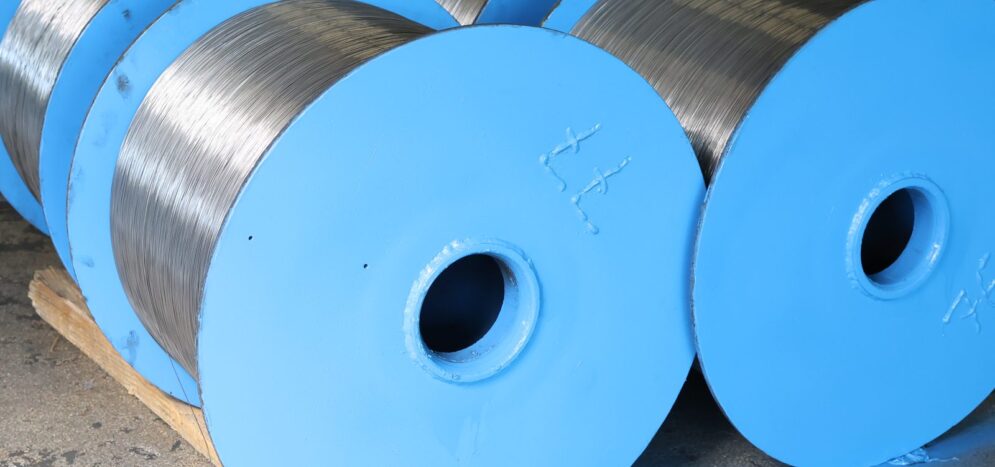
Surface condition and tensile range matter as much as the grade itself. Cold-drawn wire can be supplied bright, super-bright or black and drawn to a specified tensile band — for example 500–1050 N/mm² — so two buyers ordering the same SAE grade can still receive very different products. Always state diameter tolerance, tensile target and surface finish alongside the grade number.
Specifying and sourcing low-carbon wire from Türkiye
OSSO Wire draws SAE 1006, 1008 and 1010 in diameters from Ø1.00 to 14.00 mm to TS EN 10218, in bright, super-bright and black finishes and across a 500–1050 N/mm² tensile range. As a family-owned Turkish manufacturer with more than four decades of wire-drawing experience, we ship regularly to customers in Europe, the Americas, the Middle East and Africa, with documentation and logistics set up for cross-border trade. You can review the full cold-drawn and annealed wire range on our products page, and every heat is lot- and heat-traceable with inspection certificates to EN 10204 3.1 available on request — see our certifications and documents for the full list. Typical lead time is two to four weeks.
Frequently asked questions
Is SAE 1008 steel wire the same as SAE 1006 or 1010?
No. All three are low-carbon 10xx grades, but they differ in carbon and manganese content. 1006 is the most ductile, 1010 the strongest, and 1008 sits in between as a balanced forming and welding grade. For many mesh, fastener and appliance parts, 1008 is the safest single-grade choice.
Which standards and certificates apply to your low-carbon wire?
Our cold-drawn wire is produced to TS EN 10218, and annealed wire to DIN EN 10016 and TS 2348. Material is heat- and lot-traceable, and we can issue inspection certificates to EN 10204 3.1 so your quality team can verify each delivery against the order.
Can you match a specific tensile strength or surface finish?
Yes. Within the drawn range we can target a defined tensile band and supply bright, super-bright or black finishes. Share your diameter, tolerance, tensile target and finish, and we will confirm what is achievable before you commit.
Need SAE 1006, 1008 or 1010 wire for an upcoming build? Request a quote and our team typically responds within one business day, with EN 10204 3.1 certificates supplied as standard. Tell us your grade, diameter, tensile target and finish and we will confirm feasibility and lead time — or contact our team to work through a new specification.