
Why condenser wire is a specialised category
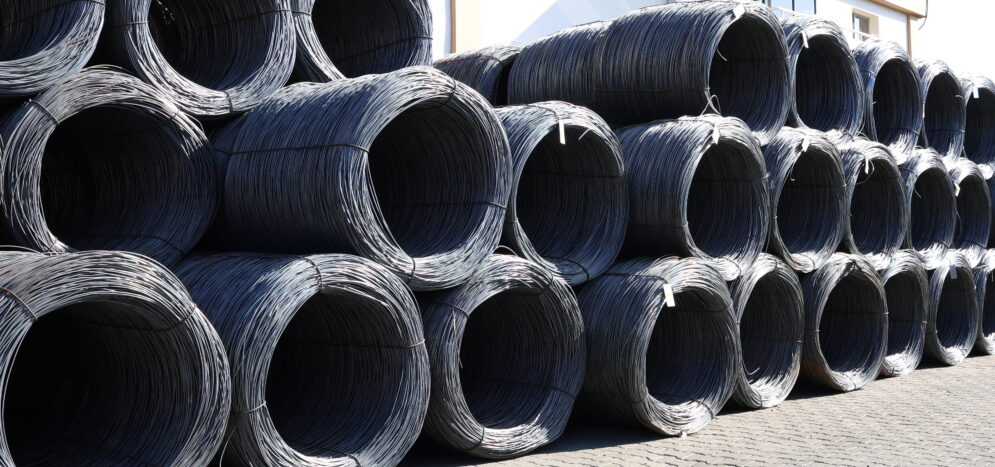
Condenser wire — often called bundy-tube grade — is used in refrigeration condensers, freezer coils and cold-chain heat exchangers. It requires a smooth, coating-ready surface and a controlled diameter range (Ø1.20–4.00 mm atOSSO Wire). It is not a commodity SKU. Buyers who treat it as one end up with adhesion or corrosion problems downstream.
Growth of cold-chain and what it means for suppliers
Cold-chain expansion — food processing, pharmaceutical distribution, e-commerce grocery — drove condenser wire demand upwards through the early 2020s and continues into 2026. That growth has attracted more suppliers into the category, but the metallurgy and surface requirements have not gotten easier. Serious buyers look for suppliers with documented cold-chain customer references.
Surface preparation: what coat-ready actually means
For condenser wire, ‘coat-ready’ means the surface has been prepared for a downstream coating step — typically powder paint or electro-galvanising — without additional pre-treatment. That requires controlled surface roughness, no residual drawing lubricant, and consistent metallurgy. Ask your supplier which coating processes they qualify for and request a sample lot for adhesion testing before committing volume.
Packaging: bobbin and spool considerations
Refrigeration line producers typically want bobbin-wound wire for direct feed into automated forming lines. Bobbin format should match your feeder — this is a mechanical fit question, not a marketing one. Confirm dimensions in the RFQ.
Documentation for regulated cold-chain end-users
Cold-chain end-users increasingly require documentation beyond a standard 3.1 certificate — traceability documentation, food-contact declarations for certain applications, and REACH compliance for European destinations. Confirm what your end-use requires and align supplier documentation before order confirmation.
Frequently asked questions
Do you supply EN 10204 3.1 inspection certificates by default?
Yes. Every export shipment travels with an EN 10204 3.1 inspection certificate showing chemistry, tensile properties and dimensional data for the actual heat. This is our default, not a paid add-on.
What are your typical lead times for EU and US buyers?
Standard grades ship 2–4 weeks from PO confirmation. Add 5–10 days sea freight to European destinations and 20–25 days to US East Coast under normal conditions. Custom grades or specialty packaging may extend production time.
Can you handle small trial orders before volume commitment?
Yes. We support new customers with sample lots and small trial orders — typically 1–5 tonnes — before ramping to volume. Contact our quote desk to arrange a sample.
What documentation do you provide for EU and US customs clearance?
For EU shipments we provide A.TR movement certificate to support duty-free entry under the EU-Turkey Customs Union. For US shipments we provide certificate of origin and any HS-code-specific documentation required. Discuss requirements with our export desk.
Ready to discuss your steel wire requirement? Request a quote and our technical desk will respond within one business day.