
Weld mesh production and what wire must do
Weld mesh production runs wire through resistance-welding heads that fuse crossing wires under pressure. Diameter tolerance and straightness matter more than tensile — the welding heads need a repeatable cross-section, and the mesh line needs wire that feeds without jams. Any variance shows up as mesh quality problems.
Ourcold-drawn wire can be supplied to weld-mesh spec.
Diameter tolerance targets
For weld mesh, aim for ±0.05 mm on diameter or tighter. That lets welding heads run at a consistent current and force setting without adjustments. Loose tolerance forces the operator to compensate and reduces production speed.
When you write the RFQ, specify diameter tolerance explicitly — do not accept ‘standard’ as a spec.
Straightness and coil format
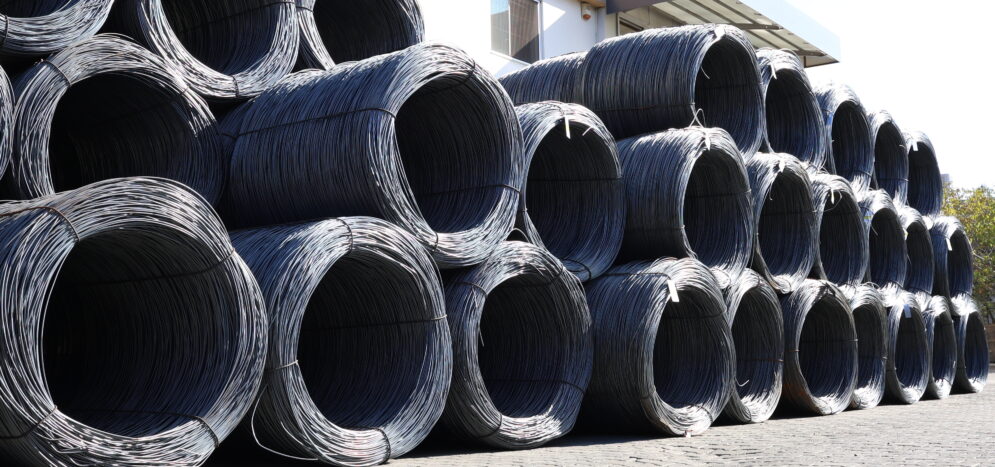
Weld mesh lines feed from bobbins or coils. Wire straightness during feed decides whether the line can run at speed. Ask your supplier about coil winding tightness and residual curvature.
A coil that unwinds cleanly matters as much as the wire chemistry.
Weldability: what to test in a sample lot
Before committing to a full production order, request a sample lot and run a weldability trial on your actual mesh line. Test the welding heads at your standard current and force settings. Check for spatter, for bond strength (a simple manual pull test tells you a lot), and for any surface residue that inhibits welding.
Only commit after a successful trial.
Packaging and container loading
Mesh producers typically want large-format coils to minimise reel changes. 1,000–2,000 kg coils are common. Confirm the coil weight your feeder can handle before ordering.
Also confirm container loading — mesh producers often coordinate directly with the mill on container fit to reduce local handling.
Frequently asked questions
Do you supply EN 10204 3.1 inspection certificates by default?
Yes. Every export shipment travels with an EN 10204 3.1 inspection certificate showing chemistry, tensile properties and dimensional data for the actual heat. This is our default, not a paid add-on.
What are your typical lead times for EU and US buyers?
Standard grades ship 2–4 weeks from PO confirmation. Add 5–10 days sea freight to European destinations and 20–25 days to US East Coast under normal conditions. Custom grades or specialty packaging may extend production time.
Can you handle small trial orders before volume commitment?
Yes. We support new customers with sample lots and small trial orders — typically 1–5 tonnes — before ramping to volume. Contact our quote desk to arrange a sample.
What documentation do you provide for EU and US customs clearance?
For EU shipments we provide A.TR movement certificate to support duty-free entry under the EU-Turkey Customs Union. For US shipments we provide certificate of origin and any HS-code-specific documentation required. Discuss requirements with our export desk.
Ready to discuss your steel wire requirement? Request a quote and our technical desk will respond within one business day.